
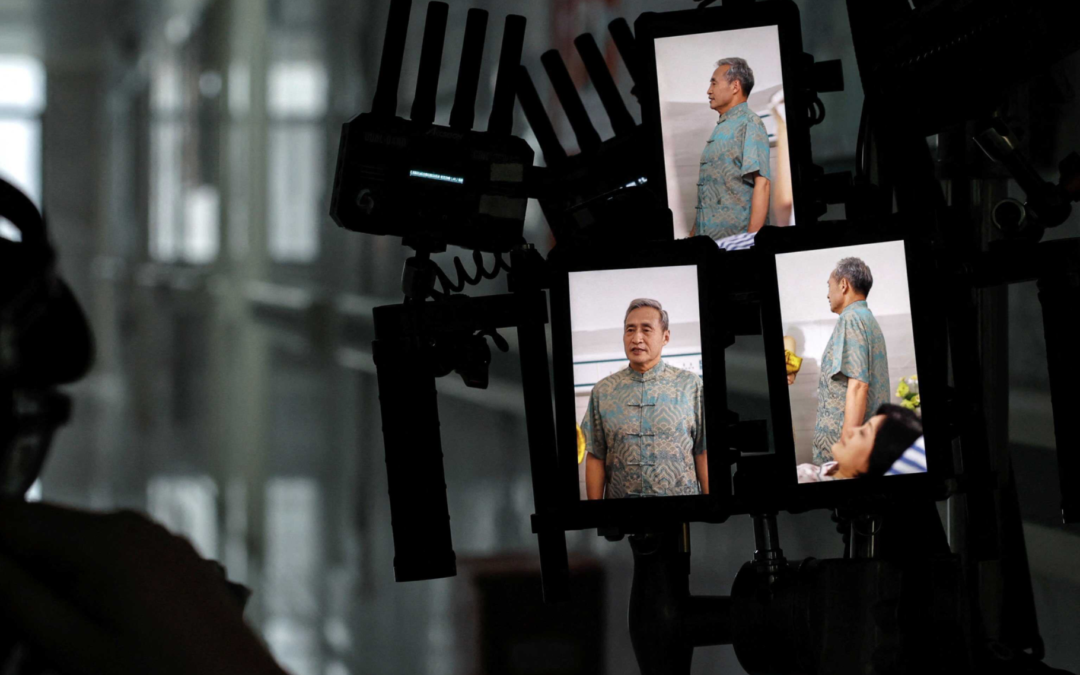
Since the birth of the smartphone, we’ve grown more accustomed to consuming content in the vertical format. It has continued to advance up to where we are today, where it’s being used to tell human stories. Today we’re going to look at the evolving format, and how it can be used as a storytelling tool. If you’d like to learn more, consider attending ESFF’s Vertical Filmmaking Presentation, part of our Gala Weekend! Get tickets here.
Originating from Asia is what is known as Verticals (or micro-dramas). These are a collection of 1 to 3 minute episodes that add up to a full narrative. They are called verticals because it’s created with the intention of being viewed vertically on a mobile device, just like social media content.
This language of storytelling poses its own challenges. Much like every other piece of content being uploaded, the creator needs to hook their audience immediately, or they risk losing their attention and having them scroll to the next. The same principle applies for verticals, but in addition to hooking your audience, you also need to establish: characters, desires, relationships, conflicts, and stakes ideally no longer than the first minute with each video.
Even as you progress through the story, there can’t be any lapses of keeping your audience engaged. Then, you have to consider that each episode needs a structure with a middle and end that makes them want to watch the next one, and complete that effort with a compelling story that connects with the viewer’s emotions. Short-form storytelling can be a difficult puzzle to solve, but it can also be a great way for storytellers to develop their creative skills.
There is a reason why mobile devices have become powerful enough to be a filmmaking tool. Because of its small frame, mobile devices offer easier controllability. This allows the device to implement better image stabilization systems, so when you are moving and shooting, your footage looks smoother with its camera movements.
The cons of using a mobile device is the image quality compared to DSLR or cinema cameras. While the smaller frame can offer some functionality and accessibility benefits, it lacks in the sensor department. A smaller sensor means less/smaller megapixels, which results in less light being absorbed into the sensor and thus less data being collected. Although mobile devices have made giant leaps in technology, they still have a ways to go before they can be considered superior or even level with larger camera systems.
If you’d like to learn more about this topic, visit our FilmFreeway page to check out the Vertical Filmmaking Special Event taking place during the 2026 Edmonton Short Film Festival. We hope to see you there!