
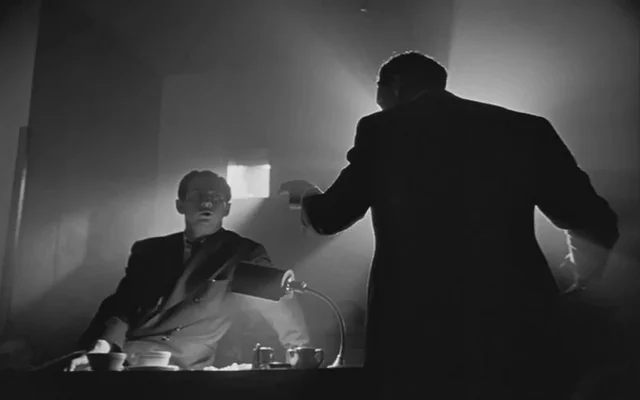
Light plays a vital role in a film’s language, but it might have a lot more to say than the average viewer might think. The topic for this blog is a narrative lighting technique that shows up in practically every movie once you know of it: chiaroscuro.
The word chiaroscuro is the result of blending together the Italian words for clear (chiaro) and dark (oscuro). The term refers to the juxtaposition of light and dark in an image, usually to convey a certain message. Chiaroscuro first appeared in renaissance-era artwork, seen in the paintings of Caravaggio, Da Vinci and other artists of that time.
While the technique never left the world of paintings, you can now find chiaroscuro used in films and photographs. Now, it is your turn to learn how to use chiaroscuro in your creative works. Don’t worry— it’s easier to pull off than you think. You can still do more than enough with a simple three-point lighting setup. In fact, many techniques use less than three. Here are a couple examples of chiaroscuro lighting.
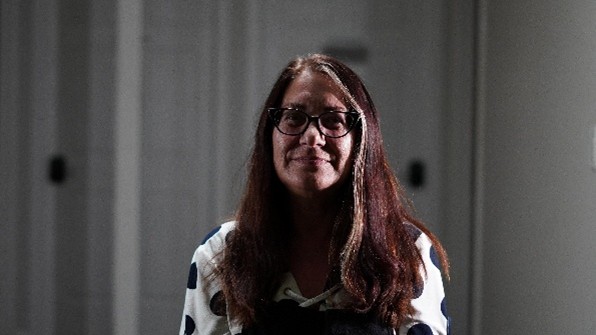
Here is a photo of a subject lit with a three-light setup. It used two L.E.D lights and a skylight as the head light.
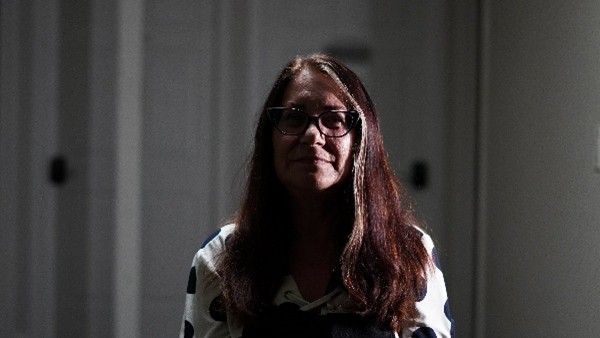
If you move the key light to the side of your subject (80-90 degrees adjacent to the nose) and drop the fill light’s intensity, you end up getting this kind of picture instead. This result is called Hatchet Lighting or Split Lighting. It’s great for making your subject appear morally ambiguous or two-faced. If you want extra drama, do away with the fill light entirely. You can also get varying results if you change the light’s height to be lower or higher than the subject.
Despite the subject not changing expressions, the subject is portrayed more menacingly. Put a key light directly below the subject’s face, and you get Monster Lighting. This is used to create unnatural and offputting shadows. Fun fact: if you’ve ever used your phone in the dark with it as the only light source in the room, you’ve unknowingly recreated this lighting setup!
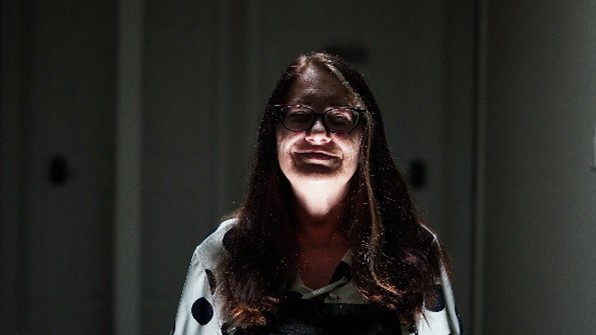
Put the key light above the subject, and you can cast a shadow over the eyes. This creates a sense of mystery or intimidation. You might have seen this kind of lighting in The Godfather. This was the work of the cinematographer and ‘Prince of Darkness,’ Gordon Willis. This form of top-lighting was named Godfather Lighting. This lighting setup was also used in Queen’s Bohemian Rhapsody music video.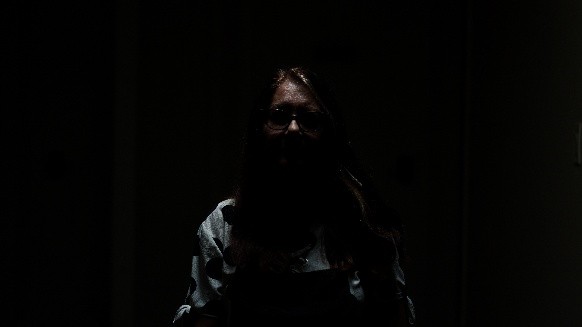
This isn’t nearly everything you can do for chiaroscuro. At the end of the day, all you need todo is emphasize the contrast between the light and dark in your photos or scenes, so chiaroscuro is only limited by the imagination. Keep at it, and narrative lighting will become a breeze. And remember— the real chiaroscuro is the lighting we learned along the way.