
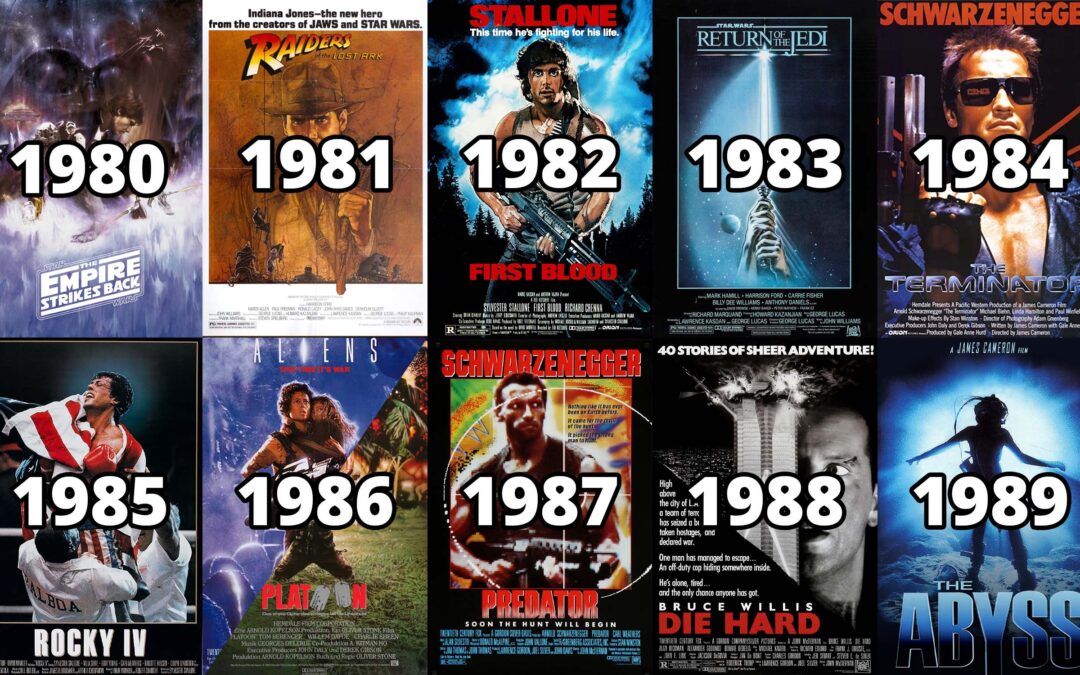
The 1980s was a decade placed near the end of the analog era and the rise of computer technology. This time of monumental change was reflected in all pieces of media and in many ways. In the case of films, many debates about the early developments of computers are like those we have today about artificial intelligence. Stories were thematic about the dangers of advancing into the digital age, how the progressive nature of humanity could lead us away from the ideal, beyond the point of return. Others were more accepting, however, embracing new technology and using it to tell stories. The decade was a shift in other ways as well. Blockbusters changed industry marketing and merchandising. Genres boomed! It was an important era in entertainment, and it continues to be felt today.
Blade Runner (1982) on the surface is about a man hunting androids resembling humans. Peel back the layers, however, and you witness a world plagued by corporate control and its creation. The morality between androids and humans, which has now become near indistinguishable, causes us to find more humanity in the mechanical creation itself rather than ourselves. It is a terrifying look into the future which has become increasingly relevant today with the rapid progression of AI. The film also makes a remarkable comment that we must focus on compassion and empathy, rather than greed and selfishness, to save our humanity and not destroy ourselves. The deep philosophical themes of Blade Runner is a shocking resemblance to many thoughts society has today, making it a cult classic that garnered a huge audience. Aside from the themes, Blade Runner has remained a huge influence to spawn the cyberpunk subgenre. Its influence is felt in movies like Akira (1988), Ghost in the Shell (1995) and other media such as the video game Cyberpunk: 2077 (2020)
Moving away from philosophy and moving towards technology, The Shining (1980) is an example of people embracing advancements. Steadicam was an invention that was used a few years prior in certain film sequences, but The Shining popularized it by using it throughout the film as a story motive. The Steadicam is a camera tool which uses a rig to attach the operator and places the weight on the hips instead of the arms. This allows for smooth, fluid camera movements and provides flexibility for creative choices. In The Shining, the Steadicam resembled the ghostly presence haunting the Overlook Hotel. Fast forward to today, and Steadicam remains a gear staple for any production. Camera movements have noticeably changed since the invention of the Steadicam and its use in the 1980s.
1980s introduced many of the first Hollywood blockbuster franchises. While Jaws (1975) and Star Wars (1977) established the original blockbuster term, the 1980s built on the high-concept model. Films started focusing more on advanced special effects and CGI to produce a “spectacle”. Tron (1982) became the first popular film to use CGI exclusively for effects. Star Wars sequels, Back To The Future (1985) and Raiders of the Lost Ark (1981) began the rise of franchises and sequels. Studios increased marketing spending with their high-concept films to reach a mass audience and started selling merchandise to maximize their profits. These practices are continued to this day with sequels still coming out.
In summary, the 1980s marked a turning point in the film industry, shaping both the technology and themes seen in movies today. From philosophical explorations of humanity in Blade Runner to technical innovations like the Steadicam in The Shining, this decade laid the groundwork for modern filmmaking.